
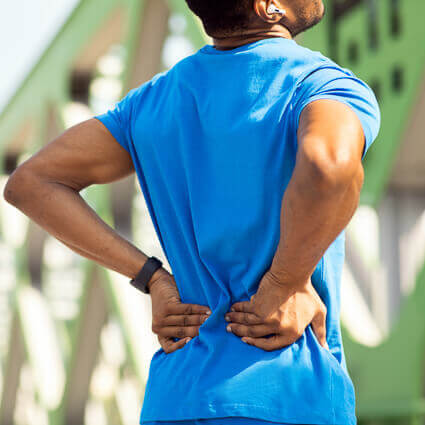
 Maybe it started as a dull ache near the end of your loop around Henderson Lake. Maybe it shows up the morning after a long run, or every time you take the stairs. However it began, hip pain can be a sign of irritation, strain, or changes in how your joints and muscles are working together.
Common Causes of Hip Pain in Walkers and Runners
Your hips don’t work alone. They’re part of a chain that includes your lower back, pelvis, knees, and feet. At Parascak Family Chiropractic, we often see discomfort associated with:
- Muscle imbalances: Tight hip flexors and weak glutes can place added stress on the surrounding structures.
- Overuse: Increasing distance or pace too quickly may leave little time for recovery. Research suggests newer runners sustain more than twice as many injuries per hour of running as more experienced recreational runners.
- Poor biomechanics: The way your pelvis, knees, and feet move together can affect how forces are distributed.
- Restricted mobility: Stiffness in the hips or lower back may change how you walk or run.
Previous injuries and sudden changes in activity levels can also play a part. Running injuries are common, too. A 2021 review of research on runners found that about 40% experienced a running-related injury.
Is the Discomfort Coming From Your Hip or Somewhere Else?
Pain isn’t always felt where it originates. Sometimes, irritation in the lower back or pelvis can cause discomfort around the hip.
Dr. Brad Parascak, DC takes a broader look through orthopaedic and neurological testing, nerve scans, and Kinetisense movement analysis. X-rays may also be recommended when clinically indicated. Together, these findings help identify possible sources of discomfort and guide decisions about care.
How Kinetisense Helps Assess Movement
During your examination, our chiropractor looks at posture, pelvic alignment, muscle strength, hip mobility, and range of motion. He also considers how your hips, pelvis, and lower back work together during everyday activities.
Kinetisense provides objective measurements of posture, balance, mobility, and movement patterns. These may reveal asymmetries or compensations that deserve a closer look.
Keep Moving, but Know When to Ease Up
Some people push through discomfort, hoping it’ll disappear. Others stop exercising altogether. Neither approach is necessarily helpful.
Modifying activities and getting assessed can help you make more informed decisions about returning to your routine.
When Should You Get Hip Pain Checked?
Consider booking an assessment if discomfort persists, worsens, interrupts sleep, or makes walking and climbing stairs difficult. Weakness, tingling, numbness, or reduced mobility also warrant attention.
Severe pain, an inability to bear weight, significant swelling, fever, or sudden unexplained discomfort should be assessed urgently by a medical professional.
Get Back to the Activities You Enjoy
Whether you’re walking the coulees, training for a race, or simply hoping to manage the stairs more comfortably, understanding what’s contributing to your discomfort is a good place to start.