
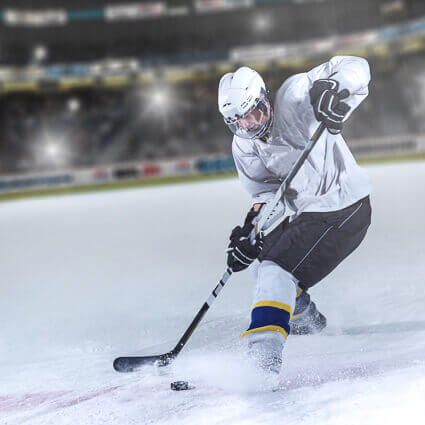
Between the deep skating stance, sudden stops, and occasional hit into the boards, hockey asks a lot of the body. If you play or have a kid on the ice several times a week, you already know the aches rarely stay in one place. A tight hip may be accompanied by a sore low back, while neck stiffness can make movement uncomfortable. Persistent pain or stiffness is worth paying attention to.
Where Hockey Wears the Body Down
The low back, neck, shoulders, hips, groin, knees, and ankles can all feel the effects of hockey. Muscle strains are common too. The repetitive skating position, high-speed direction changes, and physical contact place considerable demands on the body. Research backs this up: a study of professional ice hockey players found the hip, groin, and thigh region accounted for 23% of time-loss injuries, more than any other body area, with muscle strains (24%) and concussions (18%) the most common injury types overall.
For players experiencing mechanical low-back or neck pain, joint or mobility restrictions, muscle strains or imbalances, or hip and lower-extremity concerns, chiropractic care may form part of their management or rehabilitation. Dr. Brad also works with athletes recovering from ankle sprains and knee or shoulder injuries when appropriate. Some injuries require referral to or co-management with another healthcare professional.
Age and level of play matter as well. Youth players may experience more acute contact injuries, with growth, development, and concussion awareness important considerations. Recreational players often encounter strains and overuse concerns, while higher-level players face greater exposure as speed, contact, training volume, and competition increase.
The Moves That Cause the Most Trouble
A few hockey-specific demands show up again and again: deep skating posture, repetitive trunk and hip rotation from shooting and passing, and explosive acceleration and deceleration. Checking and falls bring the risk of acute injury, while carrying equipment and playing with limited recovery can add to the physical load across a long season.
When to Stop Playing Through It
Sharp, worsening, or persistent pain deserves attention, particularly when it affects strength, movement, balance, or the ability to play normally. Significant swelling, numbness, weakness, dizziness, or headache after a hit shouldn’t be played through and should be evaluated by an appropriate healthcare professional.
Preparing Your Body for the Ice
Before practices and games, a dynamic warm-up with light skating, leg swings, hip mobility, and activation exercises can help prepare the body for play. Afterward, gentle stretching, hydration, good nutrition, and adequate recovery are useful habits. Regular strengthening of the core, hips, and legs can also form part of an overall injury-prevention program. The evidence backs this up: a review of randomized controlled trials found that structured warm-up programs reduced overall injury incidence by roughly 30 to 46%, with the biggest benefit going to athletes and teams that stuck with the program consistently.
A Local Perspective on the Game
Dr. Brad’s connection to hockey goes well beyond his work as a chiropractor. He played on scholarship as an undergraduate before pursuing chiropractic and has since worked with Lethbridge Minor Hockey, providing baseline concussion testing and chiropractic care to elite-level players. He also served as head trainer for a AAA Midget team and has provided on-ice instruction as an assistant.
“One of the most common mistakes I see is hockey players trying to play through pain instead of addressing it early. I recommend listening to your body, getting the issue assessed, and working on mobility, strength, and recovery before a small problem turns into a more serious injury,” says Dr. Brad.
Keep Moving Through Hockey Season
Nagging pain, stiffness, or an injury that’s affecting how you move or play is worth having assessed rather than simply pushing through. Contact our Lethbridge practice today to schedule an assessment.